
1. The test fishery indices for various species started off on recent year highs. Sockeye abundance was wildly beyond expectations. All commercial and First Nations fisheries were invited to join the party. Weeks later (Aug 22) we now see the sockeye abundance estimate steadily reduced to where it now stands at less than 1% greater than it was in 2025, nowhere near expectations that were the basis for continuous netting in the Skeena approaches and in the Skeena itself. Oops! What that meant was commercial netting closed on August 2, essentially a week earlier than expected. Now we have a major gap between the estimated population of Skeena sockeye (90% or more of which originate from the Babine spawning channels) and the Babine fence count. The difference is several hundred thousand fish and it’s getting awfully late to close the gap. I’m sure DFO is more than a little anxious over the whereabouts of the missing fish.
2. With respect to the now major First Nations fishing forecasted in the Integrated Fisheries Management Plan (IFMP) that DFO goes through a contorted process to produce pre-season, there is no linkage between plan commitments carved in stone in boardrooms and what happens weeks later on the water. The result is we have had continuous in-river fisheries with everything from gill nets to floating traps to fish wheels targeting the mix of Skeena sockeye stocks, several of which were clearly identified in the IFMP as requiring extra conservation measures? (Kitwanga, Babine Lake tributaries, upper Morice, upper Kispiox.)
3. One might think DFO and/or the specific FNs involved in all the in-season sockeye harvesting would have a system of catch reporting in place to monitor in-season fishing and impacts. Not so. I invite anyone to get a response out of either DFO or any FN to questions about species specific catch numbers or anything else related to the in-river FN fishing. I’ve tried DFO three times thus far this summer and have yet to receive even an acknowledgement, let alone a response. How can it be called fisheries management when there is no disclosure of what transpires on the migration corridors until, at best, months after the season is over? Be reminded 70-80% of the north coast gill net fleet is First Nations owned and/or operated. The same vessels participate in commercial fishery openings as well as all the additional openings sanctioned as Food, Social and Ceremonial or Economic Opportunity or Demonstration or…….
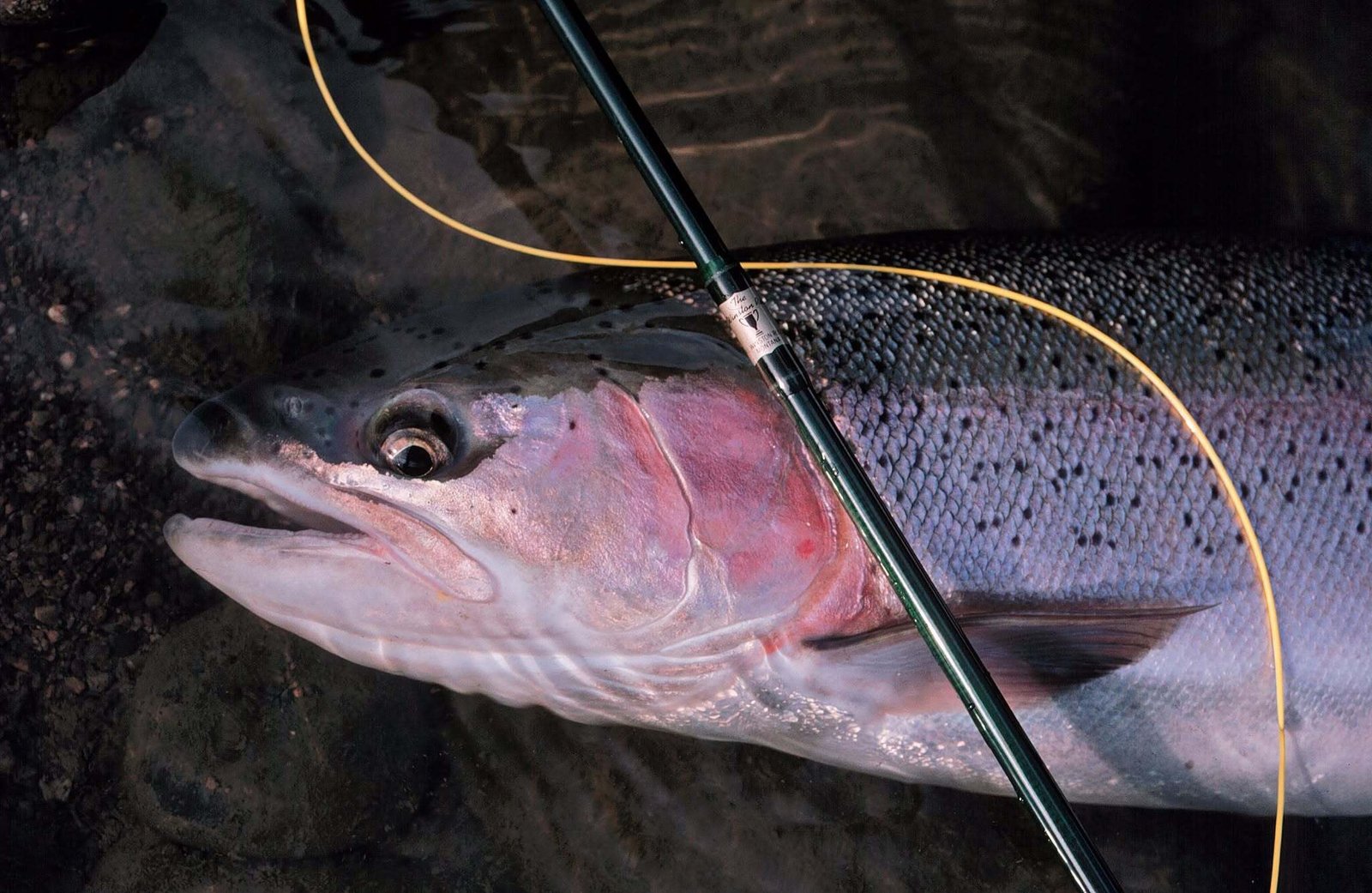
4. And what about those steelhead that have received unprecedented social media hype from the earliest test fishery accounts this summer? The 2026 index is 4x what it was to the same date last year (Aug 22). Earlier this summer it was 5x. Every indication is that difference will continue to narrow. Perhaps I’m missing it, but I don’t see evidence of the 2026 catching reflecting a fourfold difference. Think back to lean years such as we’ve experienced through most of the past decade. Low test fishery indices were rejected automatically on the basis they were negatively biased. But here we are with an unexpectedly high index, and we have people claiming it’s 1998 all over again. No one ever pauses to think about a few items. Is it possible there is an element of positive bias in the test fishery index such as is now obvious for sockeye? I’m not saying there isn’t a surprisingly good steelhead return this year, but I do caution fast forwarding to the conclusion it’s as large as perceived.
5. Given the intensity of the commercial fishery in the Skeena approaches in 2026 one would look for close association between commercial fishery catch reports for steelhead and test fishery catches. Then again, we’ve known for decades the commercial catch report are gross underestimates of reality but there should be clues about the abundance of steelhead from the sockeye to steelhead catch ratios for the test fishery. The test fishery ratio is just over 4x greater than the commercial catch reports. So much for any credibility attached to the latter. Now, if there was ever any catch composition data from First Nations fisheries we could use that same ratio as another cross check on reality.
6. Thinking there might be clues about the relative contributions of different ocean aged steelhead to the 2026 Skeena return I asked both federal and provincial agencies for an update on data I know they collaborate in compiling and analyzing. Come back next winter……maybe. So much for any in-season adaptation. I suspect the Province breathed a huge sigh of relief when it became apparent their August 15 deadline for achieving an 8,000 steelhead escapement would be met easily and no adjustment to status quo regulations would be necessary.
7. Now, about that term escapement steelhead management is supposedly built around. The steelhead abundance at the test fishery is an estimate of the number of steelhead that didn’t get caught between Southeast Alaska and the test fishery. Escapement is what spawns. As time goes on we’re seeing an exponential increase in fisheries that harvest steelhead in the time and space between passing the test fishery and spawning. Yes, recreational fishing managed on a single barbless hook, artificial lure only, catch and release basis is as light a footprint as possible. But how much catching is too much catching? More importantly, where is the accounting of that exponential increase in steelhead removals by all those in-river fisheries now sanctioned by DFO? And that doesn’t begin to address a well understood problem of IUU fishing (Illegal, Unreported and Unregulated) which is rumored to be major this year following all the hype about a huge sockeye return.
8. Back to the test fishery numbers. Here’s some additional points to consider. The Southeast Alaska net fishing this year has not been the problem it has been in other recent years. First, the migration pathway for homeward bound Skeena sockeye this summer appears to be disproportionately further south (through Dixon Entrance in Canadian waters) than it normally is. Second, even if that wasn’t the case, the earlier peak sockeye run timing this year was an unforeseen blessing in that there won’t be anywhere near the post week 30 (i.e. after July 25) escalation in harvest related to Pacific Salmon Treaty facilitated elimination of sockeye harvest restrictions commencing week 31. (Steelhead win by default, not by design.) Further, Alaskan origin pink salmon typically used as the excuse for Alaskan seiners to be active in the worst possible area for Canadian origin sockeye and steelhead starting week 31 have all but collapsed this year. We knew pink returns would be poor this year, as they always are in even years. However, no one anticipated them to be as bad as they are. The combination of high fuel prices and low pink volume and value is enough to deter interest in travelling and fishing those distant pastures. All things considered Skeena steelhead are the beneficiaries of a perfect storm. Take your pick on how much of which factor has been involved in 2026.
9. Another cross check on test fishery steelhead abundance estimates is the mark and recapture population estimation process at Witset on the Bulkley River. News on that front has yet to emerge. It will be interesting if and when it does.
Leave a Reply